
As the NDIS landscape becomes more competitive and participant-focused, families are placing greater emphasis on choosing providers that deliver consistent quality, transparency, and measurable outcomes. Respite care is no longer viewed as a simple break for carers it is now an essential part of a participant’s broader support ecosystem.
High-performing NDIS respite care providers Ipswich differentiate themselves through reliability, structured programming, and the ability to adapt services to changing participant needs.
Key Qualities That Define Exceptional Respite Care
Not all providers deliver the same standard of care. Understanding what separates average services from high-quality support is essential for families making long-term decisions.
-
Consistency of Support Workers
Continuity matters. Participants often respond better when they see familiar support staff who understand their routines, communication style, and behavioural needs.
-
Safety and Compliance Standards
Strong providers maintain strict adherence to NDIS Practice Standards, including risk management, incident reporting, and safeguarding policies.
-
Emotional Intelligence in Care Delivery
Beyond technical skills, carers must demonstrate patience, empathy, and the ability to respond calmly in challenging situations.
-
Structured Yet Flexible Routines
The best respite environments balance predictability with adaptability, helping participants feel secure while still encouraging new experiences.
Choose One of the Most Trusted Names in Respite Support
When quality, consistency, and participant-focused care matter, Positive Pathways Services stands out for delivering reliable NDIS respite care tailored to complex and individual needs.
Book a consultation with our team and experience professional respite care built around independence, dignity, and wellbeing.
The Role of Respite Care in Carer Sustainability
Carer burnout is one of the most significant challenges faced by families supporting individuals with disabilities. Respite care plays a critical role in preventing exhaustion and maintaining long-term care stability.
-
Physical Recovery
Regular breaks allow carers to rest, recover physically, and manage health needs that may otherwise be neglected.
-
Mental and Emotional Relief
Time away from caregiving responsibilities reduces stress, anxiety, and emotional fatigue.
-
Strengthened Family Relationships
When carers are less overwhelmed, relationships within the household often improve, creating a more positive and supportive environment.
Importance of Localised Support Networks
Access to expert NDIS respite care providers Seven Hills ensures that respite care remains practical and sustainable. Local services also help participants maintain familiarity with their surroundings, which can reduce anxiety during transitions.
Regional accessibility is especially important for families who rely on emergency or short-notice respite services.
- NDIS respite care providers in Ipswich continue to expand their community-based programs, offering flexible scheduling and personalised support plans that cater to both short-term and recurring care needs. Their services are particularly valuable for families seeking consistent local support without long travel times.
- NDIS respite care providers in South Brisbane are increasingly focused on inclusive care models that integrate community participation with structured support. These providers often emphasise social engagement and skill-building as part of their respite programs.
- NDIS respite care service providers Seven Hills serve a diverse population with varying levels of support needs, making accessibility and routine-based care a major priority. Their services often include both in-home assistance and short-term accommodation options designed to support independence.
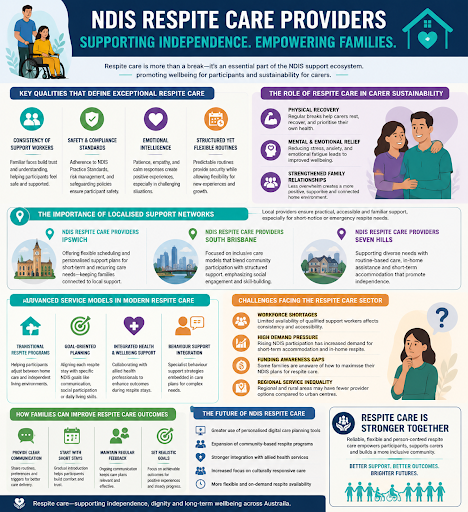
Advanced Service Models in Modern Respite Care
The evolution of NDIS respite care has led to the development of more sophisticated and participant-focused service models.
-
Transitional Respite Programs
These programs help participants adjust between home care and independent living environments, building confidence gradually.
-
Goal-Oriented Respite Planning
Instead of generic care, NDIS respite care providers South Brisbane now align each respite stay with specific NDIS goals such as communication development, social participation, or daily living skills.
-
Integrated Health and Wellbeing Support
Many providers collaborate with allied health professionals, including occupational therapists and speech therapists, to enhance care outcomes during respite stays.
-
Behaviour Support Integration
Specialist behaviour support strategies are embedded into care plans for participants with complex behavioural needs.
Challenges Facing the Respite Care Sector
Despite improvements, the sector continues to face challenges that impact service delivery and accessibility.
-
Workforce Shortages
A shortage of qualified support workers can affect consistency and availability of services.
-
High Demand Pressure
Growing NDIS participation rates have increased demand for short-term accommodation and in-home respite services.
-
Funding Awareness Gaps
Some families are still unaware of how to fully utilise their NDIS plans for respite care options.
-
Regional Service Inequality
While urban areas often have multiple providers, regional communities may face limited choices.
Need Reliable NDIS Respite Care You Can Trust?
Get fast access to personalised respite care through Positive Pathways Services, a registered NDIS provider delivering flexible in-home support and Short Term Accommodation designed around your needs.
Contact us today to discuss your respite care options and get a tailored support plan started.
How Families Can Improve Respite Care Outcomes
Families play an important role in ensuring respite care is effective and aligned with participant needs.
-
Provide Clear Communication
Sharing detailed information about routines, preferences, and triggers helps support workers deliver better care.
-
Start With Short Stays
Gradual introduction to respite care can help participants build comfort and trust in new environments.
-
Maintain Regular Feedback
Ongoing communication with providers ensures care plans remain relevant and effective.
-
Set Realistic Goals
Focusing on achievable outcomes helps create positive experiences and steady progress over time.
The Future Direction of NDIS Respite Care in Australia
The future of respite care is moving toward a more integrated and outcomes-driven model. Providers are expected to play a larger role in supporting independence, community participation, and long-term skill development.
Emerging priorities include:
Greater use of personalised digital care planning tools
Expansion of community-based respite programs
Stronger integration with allied health services
Increased focus on culturally responsive care models
More flexible and on-demand respite availability
As this evolution continues, families will benefit from more choice, better accessibility, and higher service quality across the sector.
Carer Feeling Overwhelmed? You Don’t Have to Do It Alone
Positive Pathways Services provides structured, compassionate respite care that gives carers time to rest while ensuring participants receive safe, consistent, and high-quality support.
- What is included in NDIS respite care in Ipswich?
NDIS respite care in Ipswich typically includes short-term accommodation (STA), personal care support, meal assistance, community participation, and overnight supervision, depending on your NDIS plan.
- How do I access NDIS respite care providers?
You can access respite care by checking your NDIS plan funding under Core Supports and contacting a registered local provider or support coordinator to arrange STA or in-home respite services.
- Can NDIS respite care in Ipswich be used in emergencies?
Yes, many Ipswich providers offer emergency respite care for situations like carer illness, burnout, or unexpected family emergencies, subject to NDIS approval and availability.
- What types of NDIS respite care are available in South Brisbane?
South Brisbane providers offer in-home respite, centre-based care, community access programs, and Short Term Accommodation (STA) for planned or emergency breaks.
- What qualifications do respite care workers have?
NDIS support workers typically have certifications in disability support, first aid training, manual handling skills, and ongoing professional development.
- Do NDIS respite care providers support complex needs?
Many providers offer specialised support for participants with high or complex needs, including behavioural support, mobility assistance, and medical care requirements.
- Can respite care be used regularly?
Yes, respite care can be scheduled regularly (weekly, fortnightly, or monthly) if it aligns with your NDIS plan and approved supports.
- Can NDIS respite care be provided at home?
Yes, in-home respite care is available and allows support workers to care for the participant in their own home while the primary carer takes a break.
- How is NDIS respite care funded?
Respite care is funded through the Core Supports budget in an NDIS plan, typically under Short Term Accommodation (STA) or Assistance with Daily Living categories.
- Who is eligible for NDIS respite care?
Participants with approved NDIS plans that include Core Supports funding may be eligible for respite care. Eligibility depends on assessed support needs and goals related to daily living and career support.
Positive Pathways Services is a renowned disability services and support organisation and if you are looking for the best NDIS respite care providers Ipswich, South Brisbane, and Seven Hills then we are just a call away. Feel free to reach out to us today to discuss your needs and our team will help you professionally.
